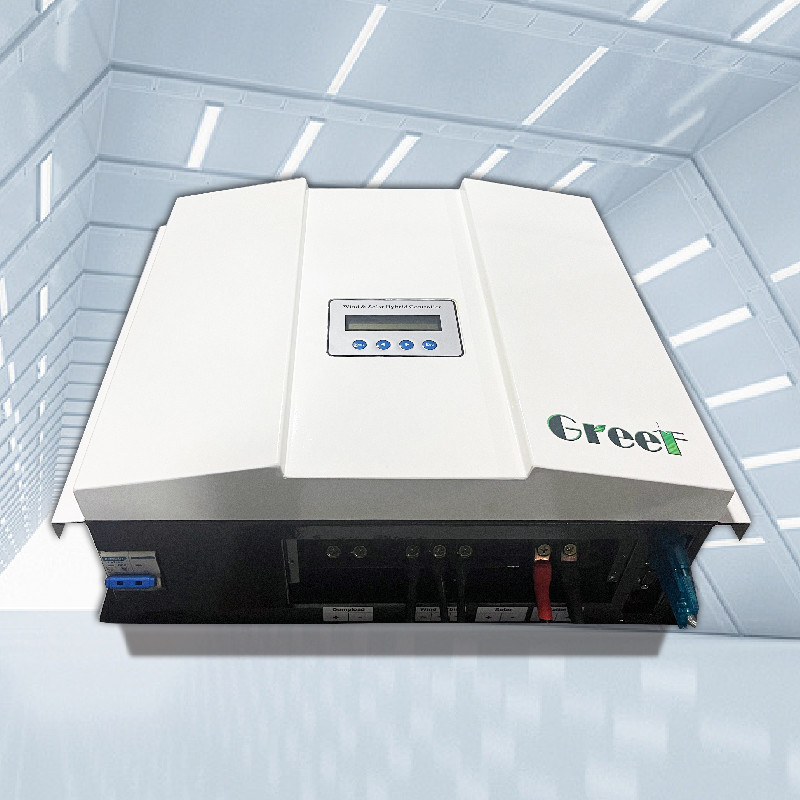
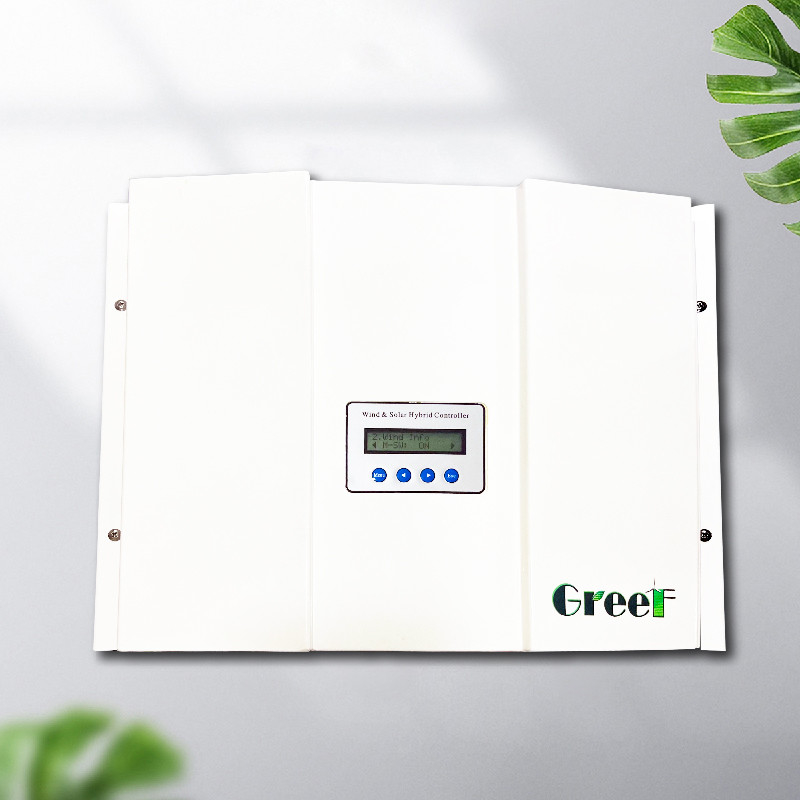
2.Kurva daya yang dapat dikonfigurasi: Pengguna dapat mengatur parameter, dan pengontrol akan secara otomatis menghasilkan kurva daya.
3.Pengisian tiga tahap: Sistem menggunakan metode pengisian tiga tahap untuk memastikan efisiensi pengisian dan umur baterai.
4.Resistensi angin dan pengurangan kecepatan: Sistem ini memiliki fitur pengurangan kecepatan listrik yang unik untuk secara efektif menangani angin kencang, mencegah overheating dan kegagalan rem.
5.Low-Power Standby: Saat tidak digunakan, sistem secara otomatis masuk ke mode low-power standby.
6.Perlindungan Overload: Sistem ini mencakup perlindungan atas kecepatan, atas tegangan, dan atas arus untuk memastikan operasi yang aman.
7.Bisa dikombinasikan dengan energi matahari.
8.Interface standar: Sistem ini dilengkapi dengan antarmuka RS485 standar dan protokol Modbus untuk mudah saling terhubung dengan sistem lain.
9.APP dan WEB pemantauan dan kontrol jarak jauh.
Parameter Produk
Model
GBBC1K/48
GBBC2K/48
GBBC3K/48
GBBC5K/48
GBBC10K/240
Energi angin nominal
1KW
2KW
3KW
5KW
10KW
Tegangan nominal sistem
48V
48V
48V
48V
24V
Di bawah tegangan (Rendah) * disesuaikan
20.8V
40.8V
40.8V
81V
210V
Di bawah tegangan pemulihan tegangan ((Rlow) * disesuaikan
23.5V
46.5V
46.5V
93V
230V
Overvoltage ((Full) * diatur
28.8V
57.6V
57.6V
115V
284V
Voltan pemulihan tegangan (RFull) * disesuaikan
26.5V
52.8V
52.8V
105V
265V
Tegangan terapung (Float) *sesuai
27.6V
54.0V
54.0V
108V
272V
Kecepatan putaran beban pembuangan angin ((Rota) * disesuaikan
My farm is 30 kilometers from town, and connecting to the power grid would cost a fortune. Three years ago, I installed a solar panel system with a battery bank. It was sufficient during spring, summer, and fall, but in winter, we often had a week of consecutive overcast days—and the batteries would run out in just three days. Last year, I decided to add a variable-pitch wind turbine, connected it to the AC coupling port of the Deye inverter, and set up a hybrid solar-wind system. Throughout the entire winter, the battery level never dropped below 45%, and I never had to work in the dark again. The Deye app allows me to monitor both the solar and wind turbine data simultaneously, and the transition between them is so smooth it’s almost imperceptible.
Relying solely on solar power during winter on a Nordic farm is a gamble. Only by combining a variable-pitch wind turbine with a Deye inverter—creating a wind-solar hybrid system—can you get through the winter with peace of mind.
Since installing this variable-pitch wind turbine, the battery hasn’t run low again. Before, I used to worry whenever we had consecutive overcast days and light winds in the winter, but now it can even charge the battery in low winds. Best of all, it doesn’t suddenly start screeching during gusts, so it doesn’t disturb my family’s sleep. The installer also mentioned that variable-pitch turbines are easier to calibrate than fixed-pitch ones. I give it five stars!
I run a small dairy farm in northern Norway, far from the power grid. A few years ago, I installed solar panels and a Deye inverter, but the solar system basically stops working in winter, and the diesel generator was costing me a fortune. This year, I added this variable-pitch wind turbine and connected it to the Deye inverter for a hybrid solar-wind system, and we haven’t had a single power outage all winter. This wind turbine starts up at low wind speeds of just 2–3 on the Beaufort scale. During blizzards, the blades automatically pitch down to slow the turbine, preventing runaway speeds, and it’s much quieter than my neighbor’s fixed-pitch model. The Deye inverter’s switching logic is smart—it prioritizes solar power when available, and automatically switches to the wind turbine when solar output drops. It’s all clearly visible on the app. Now, the diesel generator is practically idle. Wind and solar backing each other up—that’s true off-grid freedom.
Peringkat Umum
Cuplikan Penilaian
Berikut ini adalah distribusi semua peringkatSemua Ulasan